How to Make Money on Pinterest Without a Blog in 2026
Quick Answer: You can make money on Pinterest without a blog by sharing affiliate links, promoting digital products, and landing brand partnerships — all directly through Pinterest pins and boards. No website required. Pinterest allows direct affiliate linking, and platforms like Gumroad or Etsy can host your products. Even small accounts can earn because Pinterest has no minimum follower or view threshold to start monetizing.
Key Takeaways
- No blog needed: Pinterest explicitly supports affiliate links, sponsored content, and product sales without a standalone website.
- Affiliate marketing is the fastest entry point: Join programs like Amazon Associates, Awin, Shopify Collabs or Rakuten and link directly from your pins.
- Digital products have the best margins: Printable planners, templates, and eBooks sell with zero inventory and unlimited resale potential.
- FTC compliance is non-negotiable: Always disclose affiliate links with “#ad” or “#affiliate” to stay within platform rules and U.S. law.
- Pinterest SEO drives free traffic: Keywords in pin titles, descriptions, and board names directly affect how often your pins appear in search.
- Video pins outperform static images for engagement and are ideal for showcasing affiliate products.
- Brand partnerships are accessible even for mid-size creators through tools like AspireIQ and Influence.co.
- Start with one niche: Focused boards in high-performing niches like home décor, wellness, or personal finance attract the most targeted buyers.
Does Pinterest Let You Make Money Without a Blog?
Yes, and this is one of the most underrated facts about the platform. Pinterest allows creators to add affiliate links directly to pins, tag sponsored content, and sell digital products — all without owning a website.
Most monetization guides assume you have a blog to drive traffic to. But for influencers and affiliates, Pinterest itself is the traffic engine and the storefront. You pin, people find your content through search, they click your link, and you earn a commission or a sale. The blog is optional.
Who this works best for:
- Affiliate marketers who want a visual, search-driven traffic source
- Influencers building a niche audience around lifestyle, fashion, food, or finance
- Digital product creators who sell through Etsy, Gumroad, or Payhip
- Anyone who wants passive income without maintaining a website
How to Make Money on Pinterest With Affiliate Links
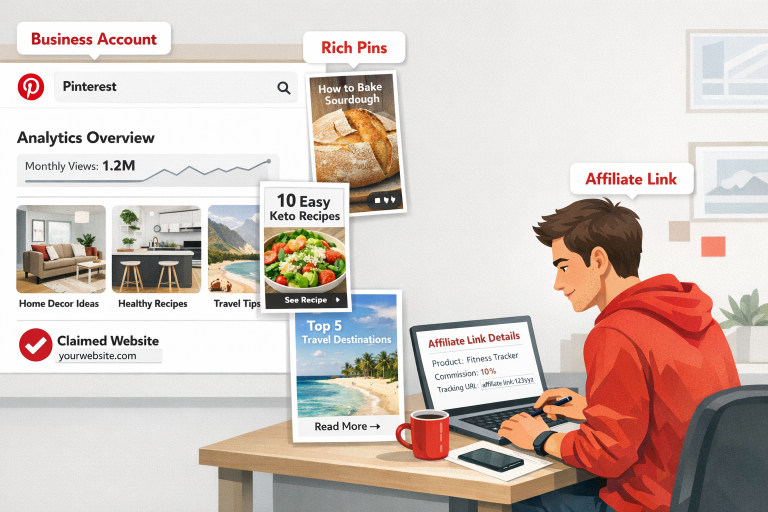
Affiliate marketing is the most accessible way to earn on Pinterest without any existing infrastructure. You join an affiliate program, get a unique tracking link, and add it to your pin. When someone clicks and buys, you earn a commission.
Step-by-step setup:
- Create a Pinterest Business account (free). This gives you access to analytics and the ability to run ads later.
- Choose a niche that aligns with popular Pinterest categories — home décor, wellness, personal finance, fashion, and food consistently perform well.
- Join affiliate programs relevant to your niche:
| Program | Best For | Commission Range |
|---|---|---|
| Amazon Associates | Physical products, broad appeal | 1–10% depending on category |
| Awin | Fashion, home, lifestyle brands | Varies by merchant |
| Rakuten Advertising | Premium brands, retail | Varies by merchant |
| Shopify Collabs | Digital tools, eCommerce | 10-30% commissions |
| ClickBank | Digital products, courses | Often 30–75% |
- Create pins with strong visuals — use Canva or Adobe Express to design eye-catching graphics that match Pinterest’s vertical format (2:3 ratio recommended).
- Add your affiliate link directly to the pin’s destination URL field.
- Write a keyword-rich description that tells people exactly what they’ll find when they click.
- Disclose the affiliate relationship in the pin description using “#ad” or “#affiliate” — this is required by FTC guidelines and Pinterest’s own policies.
⚠️ Common mistake: Hiding or skipping the affiliate disclosure. Pinterest can suspend accounts for non-disclosure, and in the U.S., the FTC requires it. Keep it visible and clear.
What Digital Products Can You Sell on Pinterest Without a Blog?
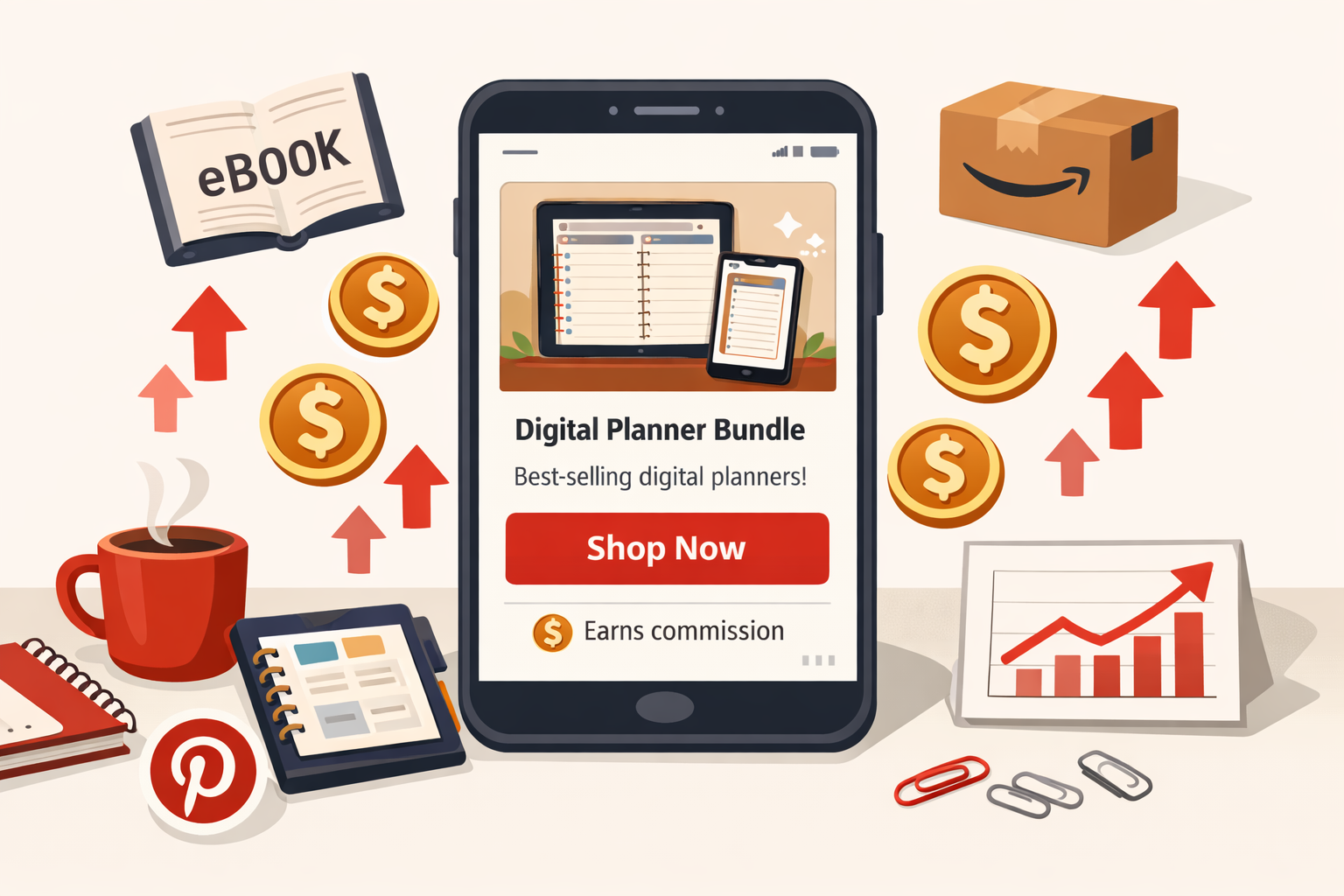
Digital products are ideal for Pinterest monetization because they have zero shipping costs, unlimited inventory, and high profit margins. You don’t need a blog — just a product hosted on a platform like Gumroad, Etsy, Payhip, or Shopify.
Top-performing digital products on Pinterest:
- Printable planners and journals — daily, weekly, budget, and fitness planners sell consistently
- Social media templates — Canva templates for Instagram, Pinterest, and TikTok
- eBooks and guides — niche how-to guides, recipe books, or financial planning workbooks
- Digital art and wall prints — downloadable artwork for home décor
- Lightroom presets and photo filters — popular in photography and travel niches
- Notion templates and productivity systems — growing demand in the productivity niche
How to sell without a blog:
- List your product on Etsy, Gumroad, or Payhip (all free or low-cost to start).
- Create multiple Pinterest pins that showcase the product visually — show the product in use, not just the cover.
- Link each pin directly to your product listing.
- Use board names and pin descriptions loaded with search terms your buyers would type.
Choose this path if: You want recurring passive income from products you create once and sell repeatedly.
How to Make Money on Pinterest Through Brand Partnerships
Sponsored content is a real income stream for Pinterest creators with engaged, niche audiences. Brands pay for exposure to your followers through pins that feature their products.
Pinterest’s Paid Partnerships tool lets you tag a brand directly in a sponsored pin, keeping everything transparent and compliant. This is the professional way to handle brand deals on the platform.
How to land brand deals without a blog:
- Build a focused niche presence first. Brands want relevance, not just reach. A 5,000-follower account in sustainable home décor is more valuable to the right brand than a 50,000-follower general account.
- Join influencer marketplaces that include Pinterest creators: AspireIQ, Upfluence, and Influence.co are solid starting points.
- Pitch proactively. Find brands whose products you already pin organically, check if they have an affiliate or ambassador program, and reach out with your Pinterest analytics showing impressions and click data.
- Set your rates based on monthly impressions, not follower count — Pinterest is a search platform, so impressions matter more.
💡 Edge case: Some brands will pay for “evergreen” sponsored pins that stay live for months, generating ongoing value. Negotiate usage rights and pin duration into your contracts.
How Does Pinterest SEO Help You Earn More?
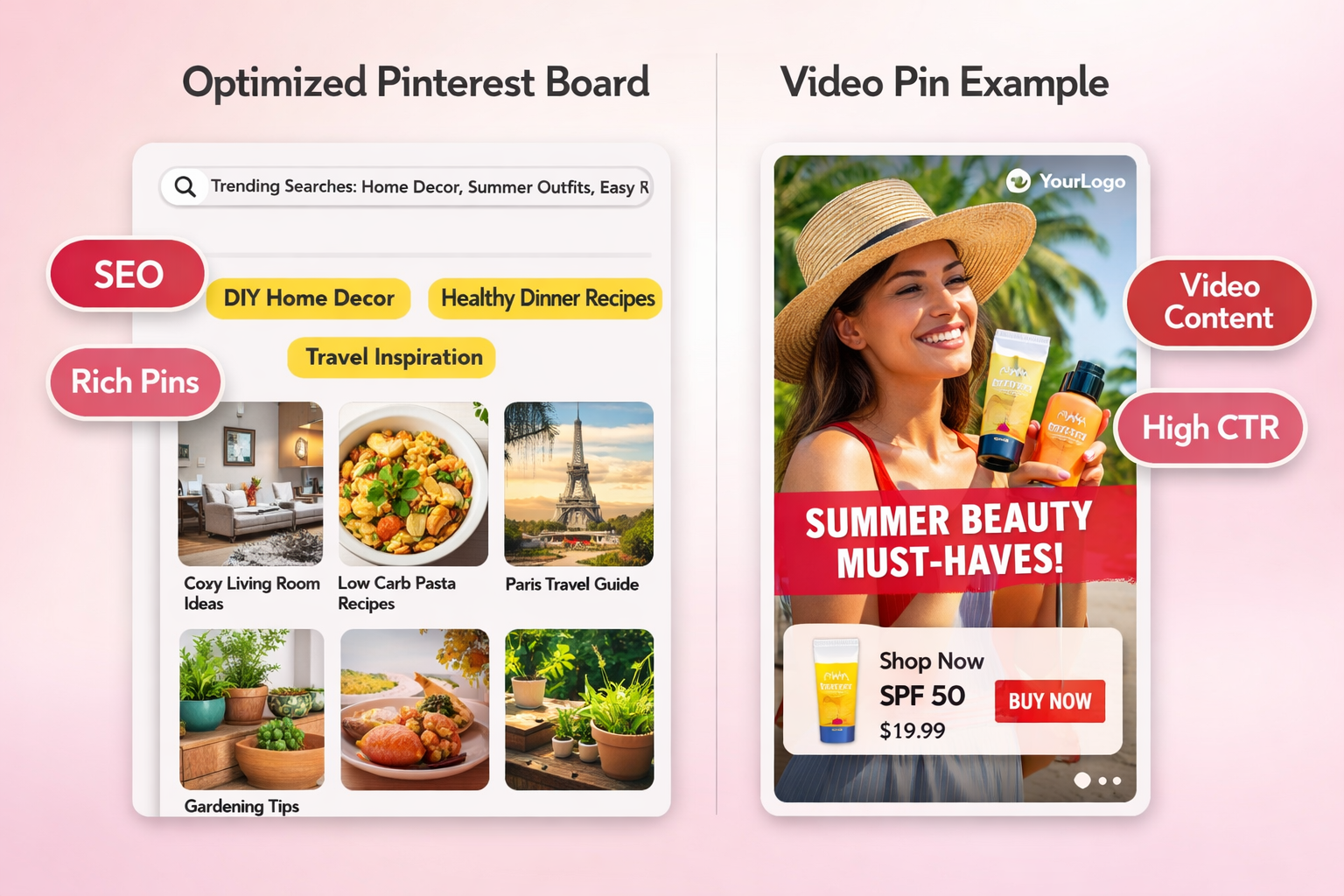
Pinterest functions like a visual search engine, and its algorithm works similarly to Google’s — keywords in the right places determine who sees your content. Better visibility means more clicks, and more clicks means more affiliate commissions or product sales.
Where to place keywords:
- Pin title — most important placement; be descriptive and specific
- Pin description — write 2–3 sentences naturally including your main keyword and related terms
- Board name — use searchable phrases like “Budget Meal Prep Ideas” instead of “My Recipes”
- Board description — add a short paragraph with relevant keywords
- Profile bio — include your niche and what kind of content you share
Quick SEO checklist for every pin:
- [ ] Title includes the main keyword naturally
- [ ] Description is 100–200 characters with 2–3 relevant keywords
- [ ] Pin is saved to the most relevant board
- [ ] Destination link is working and goes to the correct affiliate or product page
- [ ] Affiliate disclosure is included in the description
Rich Pins are worth enabling too. They pull product data — price, availability, description — directly from the linked page, which increases trust and click-through rates. You can enable Rich Pins through Pinterest’s developer settings or through Etsy (which supports them automatically).
Can Video Pins Increase Your Pinterest Earnings?
Yes, and significantly so. Video pins capture more attention in the feed than static images, making them more effective for showcasing affiliate products or digital offerings.
Best practices for affiliate video pins:
- Keep videos between 6–15 seconds for feed content
- Show the product being used, not just displayed
- Add a text overlay with a clear call to action (“Get the link in pin!”)
- Include a watermark or logo for brand recognition
- Link directly to your affiliate product or digital product listing
Video pins work especially well for categories like beauty tutorials, cooking demos, home organization, and fitness — all high-traffic Pinterest niches.
How Much Can You Actually Earn on Pinterest Without a Blog?
There’s no single answer, but here’s a realistic framework. Earnings depend on your niche, the commission rates of your affiliate programs, your pin quality, and how consistently you post.
Realistic income ranges (estimates based on typical affiliate structures):
- Beginner (0–6 months): $50–$300/month from affiliate links, mostly from building up pin volume
- Intermediate (6–18 months): $300–$1,500/month with optimized pins, a focused niche, and multiple affiliate programs
- Advanced (18+ months): $1,500–$5,000+/month combining affiliate income, digital product sales, and brand partnerships
These are rough estimates, not guarantees. Niche selection and affiliate commission rates have the biggest impact on the upper end. Selling digital products or high-ticket affiliate items (software, courses, premium physical goods) accelerates earnings significantly.
No minimum audience required: Unlike YouTube or Instagram’s partner programs, Pinterest has no follower or view threshold to start earning through affiliate links. A well-optimized pin from a brand-new account can rank in search and generate clicks.
Should You Use Promoted Pins to Grow Faster?
Promoted Pins (Pinterest’s paid ads) can accelerate results, but they’re optional. They work best once you’ve identified which organic pins are already converting.
- Minimum spend: Around $5/day, making it accessible for testing
- Targeting options: Interests, keywords, age, gender, and device
- Best use case: Amplify a pin that’s already getting organic clicks to a proven affiliate offer or digital product
Avoid promoting pins before you know they convert organically. Spend your first 60–90 days finding out which pins get the most saves and clicks, then put a small budget behind the winners.
FAQ
Do you need a website to use affiliate links on Pinterest?
No. Pinterest allows affiliate links to be added directly to pins without a website. You add the affiliate URL to the pin’s destination link field.
Which affiliate programs work best with Pinterest?
Amazon Associates, Awin, Rakuten, and ClickBank are popular choices. For digital products, platforms like Gumroad and Etsy have built-in affiliate options too.
How many pins should you post per day?
Most creators find 3–10 pins per day to be effective. Consistency matters more than volume — pinning daily for 30 days beats posting 70 pins in one day.
Is Pinterest good for promoting digital products?
Yes. Pinterest’s visual format is ideal for showcasing digital products like planners, templates, and eBooks. Link pins directly to your Etsy or Gumroad listing.
What niches perform best on Pinterest for affiliate income?
Home décor, wellness, personal finance, food, fashion, and parenting consistently attract high-intent buyers on Pinterest.
Do you have to disclose affiliate links on Pinterest?
Yes. FTC guidelines require disclosure, and Pinterest’s own policies enforce it. Use “#ad” or “#affiliate” in your pin description.
Can beginners make money on Pinterest without a following?
Yes. Pinterest is search-driven, so new accounts can get their pins discovered through keyword optimization without needing an existing audience.
What’s the difference between a standard pin and a Rich Pin?
Rich Pins automatically pull product data (price, availability, description) from the linked page, making them more informative and increasing click-through rates.
How long does it take to start earning on Pinterest?
Most affiliates see their first commissions within 30–90 days of consistent pinning, though building reliable monthly income typically takes 6–12 months.
Is the Pinterest Creator Fund worth applying for?
The Creator Fund offers tools and direct payments for qualifying creators focused on Idea Pins and video content. It’s worth exploring once you’ve built a consistent content presence.
Conclusion
Making money on Pinterest without a blog in 2026 is genuinely achievable — and for affiliates and influencers, it’s one of the most underused income channels available. The platform’s search-driven nature means your pins can keep generating clicks and commissions for months or years after you post them.
Your next steps:
- Set up a Pinterest Business account and pick one focused niche to start.
- Join 2–3 affiliate programs that match your niche and have products your audience would actually buy.
- Create 10–20 well-optimized pins with keyword-rich titles and descriptions, and add your affiliate links.
- Enable Rich Pins through your product platform (Etsy does this automatically).
- Post consistently for 60 days, track which pins get the most saves and clicks, then double down on what works.
- Add a digital product to your mix once you understand what your audience responds to.
The path from zero to consistent Pinterest income isn’t complicated — it just requires focus, patience, and showing up regularly with content that genuinely helps people find what they’re looking for.